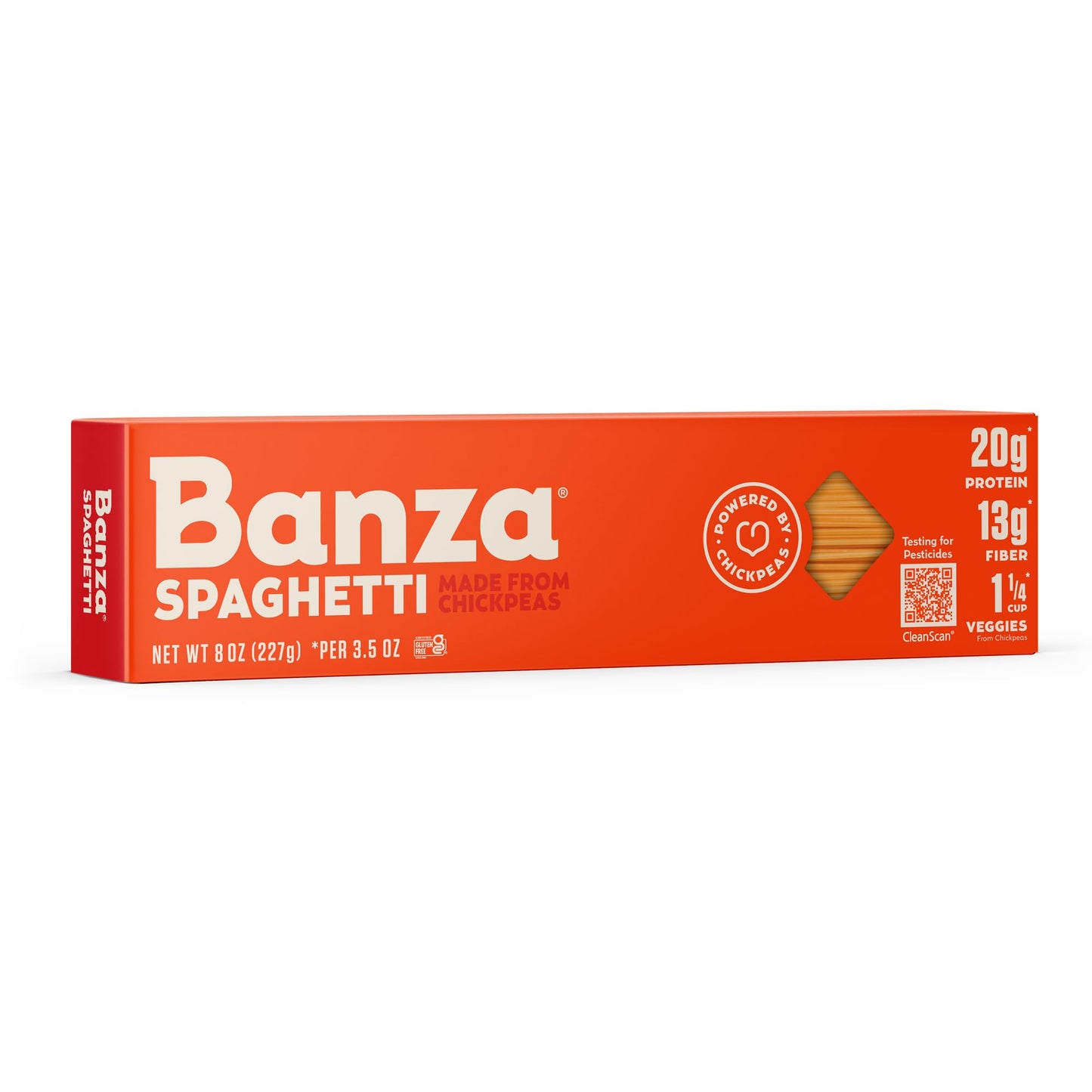
Banza Gluten-Free Spaghetti Pack of 5 - Bulk Pasta for Efficient Meal Prep Sundays and Routine Planning
Banza Gluten-Free Spaghetti Pack of 5 - Bulk Pasta for Efficient Meal Prep Sundays and Routine Planning
Couldn't load pickup availability
Why you'll love it
- Higher protein than traditional wheat pasta supports muscle and satiety goals
- Gluten-free formulation accommodates celiac and sensitivity diets without sacrificing a familiar shape
- Lower carb profile fits low-carb and diabetic-friendly eating patterns
- Same spaghetti shape and cooking method means easy 1:1 swap in favorite recipes
- Clean ingredient list (chickpeas, pea starch, tapioca, xanthan gum) appeals to clean-label shoppers
- Pack-of-5 bulk option reduces cost per serving and prevents stockouts for frequent pasta households
Perfect for
- High-protein spaghetti dinner swap for traditional wheat pasta
- Gluten-free weeknight family meal for celiac or sensitive eaters
- Lower-carb pasta base for fitness-focused meal prep
- Plant-based protein anchor for vegetarian dinners
- Quick pantry staple for last-minute healthy meals


Product Information
Grocery
Chickpea Pasta
Banza Pasta
Banza Chickpea Pasta – High Protein Gluten Free Healthy Pasta – Spaghetti (8 oz.)
Ingredients
Chickpeas, Pea Starch, Tapioca, Xanthan Gum
Items Details
Frequently Asked Questions
Can I batch-cook Banza for the whole week's meal prep?
Yes. Banza Spaghetti holds up well in the fridge for 3 to 4 days after cooking, making it ideal for Sunday meal prep. Portion it into containers with sauce and protein for grab-and-go lunches all week.
How fast does it cook so I can keep weeknight dinners efficient?
Banza cooks in roughly 8 to 10 minutes, similar to traditional spaghetti. You can keep your existing dinner timeline and simply swap the box in your pantry for a 1:1 cooking experience.
Does it hold up well in the fridge for grab-and-go lunches?
Yes. Cooked Banza Spaghetti maintains its texture better than many gluten-free pastas when refrigerated, so it works well for Monday-through-Friday office lunch rotations.
Is the pack-of-5 format a good value for frequent meal preppers?
It is one of the most cost-effective ways to buy Banza. For households that meal prep weekly, the pack-of-5 lowers your per-serving cost and prevents the last-minute grocery run when you run out mid-prep.
Can I freeze portions of cooked Banza for later in the month?
Yes. Cooked Banza freezes well in airtight containers or zip bags. Thaw overnight in the fridge and reheat with a splash of water or extra sauce for a quick meal.
Does Banza fit into macro-counting and fitness meal prep routines?
Yes. The higher protein and lower net carb profile makes Banza a favorite base for macro-tracking meal prep. You can build balanced bowls with lean protein and vegetables while keeping your numbers on target.
Can I cook it ahead and reheat without it turning to mush?
Yes. Cook it to al dente, rinse briefly with cool water, toss with a little olive oil, and store. It reheats well in the microwave or on the stovetop without breaking down like some gluten-free pastas do.
Is Banza a good choice for office lunches that don't need reheating?
Yes. Cold Banza pasta salads with veggies, olive oil, and a protein like grilled chicken hold up beautifully in lunch containers and are a refreshing alternative to sandwiches.
Can I use Banza in a stir-fry for fast dinner prep?
Yes. Baza's spaghetti shape works well in stir-fries and Asian-inspired dishes. Cook it slightly under al dente, then toss it into the wok for the final minute of cooking.
Is Banza a better meal prep base than rice or quinoa?
It depends on your macros, but Banza offers significantly more protein per serving than white rice and brings a familiar pasta experience many people find easier to stick with long term than grain bowls.
Is Banza a more efficient protein source than chicken for meal prep?
They serve different roles — chicken is a pure protein add-in, while Banza is a higher-protein carbohydrate base. Pairing Banza with a smaller portion of lean protein can be a more efficient way to hit your macros in a single meal.
How does chickpea pasta compare to regular pasta for meal prep?
Banza holds up better in the fridge than many wheat pastas and offers a meaningful protein and fiber boost, which is why it has become a meal prep staple for fitness-focused and macro-tracking eaters.
I'm worried chickpea pasta will fall apart when I reheat it later.
Banza is specifically formulated to hold up to reheating better than most gluten-free pastas. Cook it al dente and store it with a little sauce or oil to keep it from drying out, and it reheats cleanly all week.
Is the longer cook time worth the meal prep tradeoff?
Banza cooks in about the same time as traditional spaghetti — typically 8 to 10 minutes — so there is no meaningful cook time tradeoff. You get a higher-protein, gluten-free base without adding a single minute to your routine.
Will the higher fiber from chickpeas cause digestive issues during a busy work week?
Most people adjust within a few days. If you are new to higher-fiber legume-based pastas, start with smaller portions and increase gradually while drinking plenty of water to avoid discomfort.
I'm not sure I can commit to a 5-pack — is the single box a smart way to start?
Yes. A single 8 oz box is the right way to test whether Banza fits your routine. Once you confirm the taste, texture, and meal prep performance, the pack-of-5 becomes the better value for ongoing use.
How do I cook Banza Spaghetti on the stovetop?
Bring a large pot of well-salted water to a boil, add the spaghetti, and cook for 8 to 10 minutes, stirring occasionally, until al dente. Drain, toss with your favorite sauce, and serve. Banza can also be finished directly in the sauce for a few minutes to absorb flavor.
Can I use Banza in baked pasta dishes like spaghetti casserole?
Yes. Cook the spaghetti a minute or two under al dente, then layer it with sauce, cheese, and any add-ins. The pasta will finish cooking in the oven and absorb the flavors of the dish without falling apart.
How should I store cooked Banza and how long does it last?
Store cooked Banza in an airtight container in the refrigerator for up to 4 days. For longer storage, portion it into freezer-safe bags or containers and freeze for up to 2 months. Reheat with a splash of water or extra sauce to refresh the texture.
Is Banza Spaghetti compatible with gluten-free, low-carb, and high-protein diets?
Yes. Banza Spaghetti is certified gluten-free, delivers a lower net carb count than traditional semolina pasta, and provides significantly more plant-based protein per serving. It is designed to fit cleanly into all three eating patterns at once.
Does Banza work with any sauce or recipe that calls for traditional spaghetti?
Yes. The cut, cook time, and behavior of Baza mirror traditional semolina spaghetti closely enough that it works as a 1:1 swap in virtually any recipe — marinara, bolognese, pesto, aglio e olio, stir-fries, cold pasta salads, and more.
What exactly comes in the box and is anything sold separately?
Each box contains 8 oz of dry chickpea spaghetti. Nothing else is needed — just boiling water, salt, and your favorite sauce. You can buy it as a single 8 oz box or in a pack of 5 for a lower per-serving cost.
Is Banza safe for people with celiac disease and gluten sensitivities?
Yes. Banza Spaghetti is certified gluten-free and made without wheat, barley, or rye. It is formulated to be safe for celiac diets and gluten-sensitivity lifestyles. Always check the package for the most current manufacturing and allergen information.
Does Banza contain any major allergens I should be aware of?
Banza is made from chickpeas and does not contain wheat, dairy, or nuts. The product is manufactured in a facility that may handle other allergens, so anyone with severe allergies should review the current package label before consuming.
What is the difference between chickpea pasta and regular wheat pasta?
Chickpea pasta is made from legumes rather than refined wheat semolina, which gives it a meaningfully higher protein and fiber content and a lower net carb count. The flavor is mildly nutty and the texture holds al dente well, while the cooking method remains essentially the same as traditional spaghetti.